
Preparing for an Adult Neuro-Vision Evaluation in Tigard: Symptoms and Daily Challenges to Share
Preparing for an Adult Neuro-Vision Evaluation in Tigard: Symptoms and Daily Challenges to Share
Think about the last time your vision interrupted something you wanted to do. Maybe you closed a book after two pages because the words blurred, or felt dizzy scanning a grocery shelf even though you could read each label. At our Tigard office, examples like these help us decide which visual skills to examine during your adult neuro-vision evaluation.
Describe What Happens During a Typical Day
Start with an activity that has become harder. Tell us what you notice first, how long you can keep going comfortably, and what happens when you stop.
When you read, do you skip lines, reread the same sentence, or use a finger to hold your place?
At work, does the screen take a moment to come into focus when you look up from your notes?
At the grocery store, do you feel unsteady when you scan the shelves or when people pass your cart?
On stairs, have you started reaching for a handrail because it is harder to judge where a step ends?
Tell Us When You First Noticed a Change
If symptoms began after a concussion or another injury, tell us which tasks felt different afterward. Longstanding difficulties matter, too. For example, if you have always lost your place while reading but only recently started getting headaches, mention both.
A note as simple as “Yesterday I read for 15 minutes before the print blurred, and it cleared after a short break” gives us a starting point.
What to Bring to Your Evaluation
Plan for 60 to 90 minutes. Bring the glasses you use for reading, computer work, or distance, along with any referral notes or recent eye exam records you have. Think of one activity you would like to do more comfortably, whether that is finishing a work shift or reading a chapter before bed.
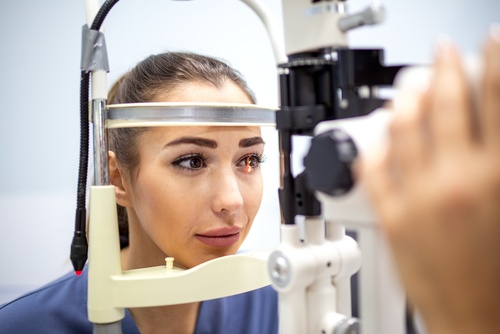
Your examples help guide our testing. If switching between your notes and a monitor is difficult, for instance, we may check how readily your eyes change focus between those distances and how well they work together.
Call CONVERGE Neuro Optometry in Tigard, OR, at (503) 906-3596 to schedule your adult neuro-vision evaluation.



Contact Info
Business Hours
- Monday By Appointment
- Tuesday 8:00am to 6:00pm
- Wednesday 8:00am to 6:00pm
- Thursday 8:00am to 6:00pm
- Friday 8:00am to 6:00pm
- Saturday Closed
- Sunday Closed
© 2026 CONVERGE Neuro Optometry. All rights Reserved. Accessibility Statement - Privacy Policy - Sitemap
Powered by:
